
Market Guide
How to Identify Water Utilities Preparing for Major Treatment Plant Upgrades
A major treatment plant upgrade is the slowest event in a utility's capital life, and the best documented. The public record shows it coming three to five years before a solicitation does.
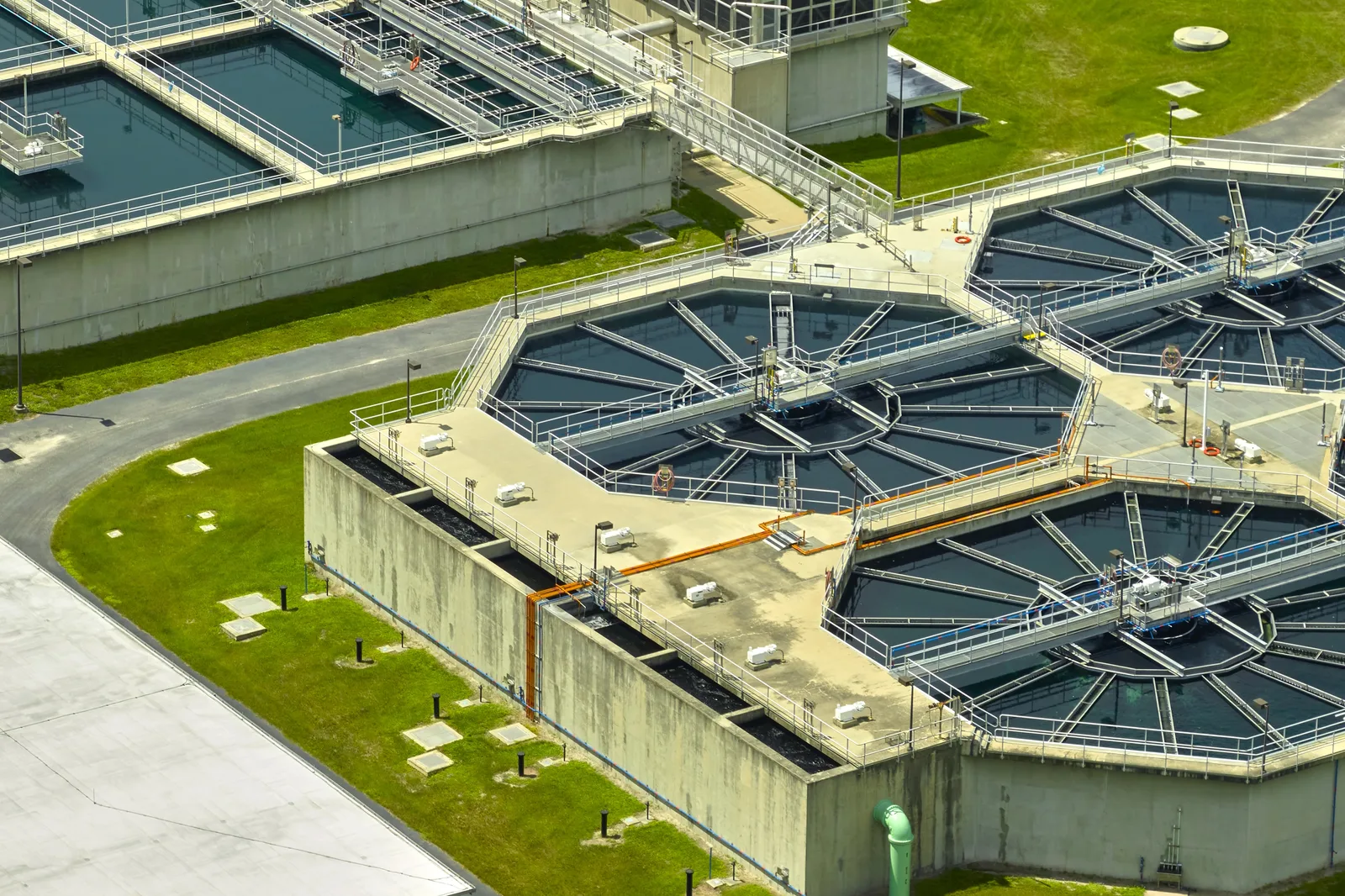
A major treatment plant upgrade is the largest single decision most water utilities make in a decade. It is also the slowest. Between the first study that names a problem at the plant and the first construction contract there are usually three to five years, sometimes more, and nearly every step in between is a public act: a study approved at a board meeting, a line item added to a capital improvement plan, a rate increase adopted to pay for it, a project listed with a state funding program.
For AEC and consulting firms, and for treatment-technology providers, that trail is the opportunity. A firm that learns of the upgrade from the design solicitation competes on fee against a field that is already assembled. A firm that learns of it from the condition assessment has time to understand how the utility has framed the problem, to be in the room while alternatives are being compared, and to shape its approach to the delivery method the utility is likely to choose. This brief sets out what the trail looks like, which documents carry it, and how to tell a utility that is thinking about an upgrade from one that has decided.
Why do treatment plant upgrades announce themselves years early?
Because a utility cannot do one quietly. A treatment plant is the utility’s most expensive and most regulated asset, and a major change to it touches every governance process the utility has.
The sequence is remarkably consistent across owners of every size. A condition assessment, master plan, or regulatory finding identifies a need at the plant. A facility plan or preliminary engineering report compares alternatives and recommends one, with a cost opinion. The recommended project enters the capital improvement plan, first as a planning or design amount, then as phased construction amounts in later years. A rate study or rate case establishes how the utility will pay for it, through rates, reserves, debt, or grants. The utility pursues funding: a listing with the state revolving fund, a letter of interest to the federal Water Infrastructure Finance and Innovation Act program, a bond issue. The board approves engineering contracts for preliminary design, pilot testing, or an owner’s advisor. Only then does a solicitation for design or construction appear.
Each of these steps is documented, and most are documented more than once: in the plan itself, in the board packet that approved it, and in the minutes that record the vote. The signal is not hidden. It is scattered across document types and across years, which is a different problem, and one this brief returns to below.
What drives a major treatment plant upgrade?
Four drivers account for most of them, and knowing which one is at work tells a firm what kind of project to expect and how fast it will move.
Regulation. The most time-bound driver. The national drinking water standard for PFOA and PFOS, set at 4 parts per trillion in 2024, carries a 2029 compliance date, which the EPA has proposed extending to 2031 for systems that need it. A utility whose monitoring results exceed the standard is on a clock, and a treatment addition at the plant, whether granular activated carbon, ion exchange, or membranes, is the usual response. Disinfection byproduct limits, revised corrosion control under the Lead and Copper Rule Improvements, and on the wastewater side tighter nutrient limits in a renewed discharge permit or a consent order, all produce the same pattern: a dated obligation, a treatability or pilot study, and a capital project.
Condition and age. The slowest driver and the largest. The EPA’s most recent national needs survey put the twenty-year drinking water infrastructure need at $625 billion, and while two thirds of that is pipe, the remainder is dominated by treatment, storage, and source. A plant built in the 1960s or 1970s reaches the end of its structural, electrical, and process life in the same decade, and the condition assessment that says so is the first public document in the sequence.
Capacity and growth. A utility approaching the rated capacity of its plant, or one that has imposed a connection moratorium, will plan an expansion. The signal appears first in a water master plan’s demand projections and then in a capital plan line item named for the expansion.
Source water. A new or changing source forces a treatment change. Drought-driven blending, a switch from groundwater to surface water, a new reservoir, or an advanced water purification program for reuse each requires a plant that the utility does not yet have, and each is announced in a master plan long before it is designed.
Which documents carry the signal?
The documents below are listed roughly in the order they appear. The strongest reading comes from finding the same plant named in several of them.
Capital improvement plans. The single most useful document, and the one that benefits most from being read across editions. A treatment plant upgrade shows up as a line item named for the plant, often with a phase number. The pattern to look for is a planning or design amount in the first year or two followed by much larger construction amounts in the outer years, and a total that grows from one edition to the next as the cost opinion firms up. A project that appears in year five of one plan and year three of the next has been accelerated. A project whose outer-year amounts were removed has been deferred. The comparison is the signal; a single edition only tells you what the utility said once.
Master plans, facility plans, and condition assessments. These are where the upgrade is first named and where the alternatives are compared. The recommended alternative, its cost opinion, and the stated reason for it, whether compliance, condition, capacity, or source, tell a firm what the utility thinks it needs before any engineer has been hired to design it. These plans are approved at public meetings, so the board packet usually carries the full document.
Rate studies and rate cases. A multi-year rate increase is almost always justified by named capital projects, and the financial plan in a rate study will show which years the plant upgrade is expected to be funded and whether the utility intends to issue debt for it. For investor-owned utilities and for public utilities that file with a state commission, the rate case record is especially detailed.
Board agendas and minutes. The record of acts rather than intentions. An engineering services contract for a condition assessment, a pilot study, a preliminary design report, or an owner’s advisor is a board decision, and it appears on an agenda weeks before the vote and in the minutes afterward. A pilot study contract is a particularly strong signal for treatment-technology providers, because it means the utility is choosing between technology categories now and will write the result into the basis of design.
Funding records. A project on a state revolving fund’s project priority list has an engineering report behind it, because the state requires one to list it. The intended use plan that carries the list is published annually by every state. A WIFIA letter of interest, which the EPA publishes, indicates a project large enough to warrant federal credit assistance. A bond official statement lists the projects the proceeds will fund. Grant awards for emerging contaminants or for resilience name the plant and the treatment process.
Regulatory records. Monitoring results, violations, administrative orders, and consent decrees are public, and a compliance-driven upgrade will appear here before it appears anywhere else. On the wastewater side, a discharge permit renewal with new effluent limits and a compliance schedule is effectively a published capital plan for the plant.
Procurement precursors. Before the main design solicitation there are usually smaller ones: a request for qualifications for an owner’s advisor or program manager, a request for proposals for pilot testing, a solicitation for a construction manager at risk or progressive design-build partner. Each of these marks a stage, and the last of them tells a firm which delivery method the utility has chosen.
How do you tell a plan from a decision?
The most common error in reading the public record is treating a stated intention as an act. A master plan that says the utility “will evaluate” treatment alternatives has not decided anything. A board that has approved a contract for a preliminary design report has.
The test is tense, not date. “Is evaluating,” “plans to,” and “anticipates” describe plans. “Approved,” “awarded,” “adopted,” and “listed” describe acts. A useful discipline is to rank each utility on a ladder:
- The plant is named as a need in a study or plan.
- A study or assessment of the plant has been funded and awarded.
- An alternative has been selected and a cost opinion published.
- Design has been funded in the capital plan, with construction in the outer years.
- Funding has been secured or applied for, through rates, a state revolving fund listing, WIFIA, or a bond.
- A delivery method has been chosen and an advisor or pilot contract awarded.
- A design or construction solicitation has been issued.
A utility at rung one may never reach rung seven. A utility at rung five almost always does. The commercial window for shaping the project is between rungs two and six, and it closes at rung seven.
When should a firm engage?
That depends on what the firm sells and on how the utility intends to deliver the work.
For an AEC or consulting firm, the window is facility planning, before the design services procurement. A firm that has helped the utility frame its alternatives is positioned differently from one that reads the resulting scope in a solicitation. Where the utility is heading toward progressive design-build or construction manager at risk, the window widens, because the team is selected on qualifications and approach well before the price is set, and team formation itself takes months.
For a treatment-technology provider, the window is the alternatives analysis and the pilot. Once a basis of design names a technology and a basis-of-design report has been accepted, procurement language will follow it, and a provider of a different category of treatment is competing against the specification rather than against other vendors. The signals that matter are therefore the pilot study contract, the alternatives report, and any board discussion of treatment options, all of which precede the design procurement by a year or more.
Under conventional design-bid-build, early knowledge helps with planning but rarely changes who wins the construction contract. The delivery method is itself a signal worth reading, and the documents above carry it: capital plan language about accelerated schedules or bundled scopes, board discussion of owner capacity, a WIFIA application, or an advisor solicitation that names the method.
What does the sequence look like in practice?
Consider a typical sequence for a mid-sized utility facing a compliance-driven upgrade. The pattern is composite rather than a single named utility, but every step in it is one that appears in public records every month.
In year one, monitoring results reported to the state and summarized in the consumer confidence report show a regulated contaminant above the standard. The board approves a treatability study with its engineer; the agenda item and the minutes name the plant. In year two, the study recommends an alternative with a cost opinion, and the next capital improvement plan adds a line item for the plant with a design amount in year three and construction amounts in years four and five. The utility commissions a rate study, which cites the project as the principal driver of a multi-year rate increase. In year three, the project appears on the state’s revolving fund project priority list, the board awards a pilot study contract, and the utility issues a request for qualifications for a progressive design-build partner. The design solicitation most firms would first notice follows in year four.
A firm reading the record saw the plant named three years before that solicitation, saw the technology decision being made two years before it, and saw the delivery method chosen a year before it.
Where Water AI fits
The difficulty is not that these signals are secret. It is that they are spread across thousands of owners, a dozen document types, and several years, in inconsistent formats and with inconsistent vocabulary, so that assembling the trail for even one utility by hand is slow and assembling it for a market is impractical.
Water AI is built for that problem. It monitors the public records of water infrastructure owners across the United States, including capital plans, master plans, funding activity, rate filings, regulatory actions, and board materials, and structures them into project-level signals. Successive capital plans are compared so that a plant whose budget is growing or whose schedule has moved stands out. Board records are read for acts rather than intentions. Delivery-method language is flagged so that a firm can tell which upgrades are worth early engagement. The result is a view of which utilities are preparing for major treatment plant upgrades, at what stage, and under what driver, available while there is still time to act on it.
Frequently asked questions
- What is the earliest public sign that a utility is planning a treatment plant upgrade?
- Usually a condition assessment, water master plan, or facility plan that names the plant and recommends an alternative. That document often appears two to five years before a construction contract, and it is typically approved in a public board meeting, so the agenda and minutes record it.
- Which document is the most reliable indicator that an upgrade will actually be funded?
- The capital improvement plan, read across two or more successive editions. A plant that moves from a single planning-year amount to phased design and construction amounts in the outer years, and whose total grows from one edition to the next, is being budgeted rather than merely studied. A rate study that cites the same project confirms the utility intends to pay for it.
- How do funding records help identify an upgrade early?
- A utility that lists the project on its state's Drinking Water or Clean Water State Revolving Fund project priority list has already produced an engineering report. A WIFIA letter of interest signals a project large enough to warrant federal credit assistance. A bond official statement names the projects the debt will fund. Each is public and each precedes the solicitation.
- When should an engineering firm or technology provider engage?
- Before the basis of design is fixed. For an engineering firm that means during facility planning, before the design services procurement. For a treatment-technology provider it means during the alternatives analysis and pilot testing stage, when the utility is still choosing between technology categories rather than between vendors.
- How does Water AI help with this?
- Water AI monitors the public records of water infrastructure owners across the United States, including capital plans, funding activity, rate filings, regulatory actions, and board materials, and structures them into project-level signals so that a firm can see which utilities are moving toward a treatment plant upgrade and at what stage.